Organizations That Make Sense
What are the practices and patterns
that nourish us and our organizations?
Is there a way to be in organizations that honors the whole interconnectedness of life?

About this Project
What if the real work isn’t making decisions
– but making sense?
What if we already have all the tools
– but it’s our own way of thinking that gets in the way?
What would it take to leave behind the code of modernity – separation, control, individualism and disembodiment – and invite a rethinking of what organizations are and what they do?

Listen
A 5-part podcast series explores what organizations would look like
if we started from the assumption that everything is interconnected.
In other words, what would a kinship paradigm of organizations look like?
Episode 1: Context
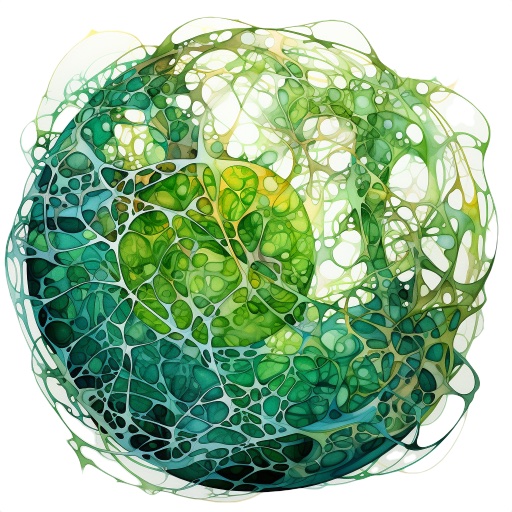
A radically different way of viewing organizations: as interconnected tapestries woven from people, objects, histories, emotions, language, and the more-than-human world. Instead of a modernist obsession of false certainty and controlling outcomes, let’s be honest that we’re actually always discerning contextually – choosing where to place our attention amid infinite connections and possibilities.
Listen:
Episode 2: Relevance

But if all is interconnected, how do choose what to pay attention to? This episode introduces “relevance realization,” a concept from cognitive scientist John Vervaeke. Relevance realization is the self-organizing, recursive process by which we filter and prioritize what matters in any given context, drawing on intuition, feeling, caring, and embodied knowing – rather than pure reason. Organizations based on non-algorithmic, pseudo-rationality and separation cannot use relevance realization effectively.
Listen:
Episode 3: Boundaries

In an interconnected worldview, how do we define where an organization begins and ends? Like a pool carved into the ocean, organizations are temporary basins we create within the vast tapestry of life, with boundaries that are ultimately arbitrary – but necessary. We need both the fiction of separateness (to act as one collective body) and the reality of interconnectedness (to stay in contact with the world).
Listen:
Episode 4: Stewardship

Context stewardship is the practice of improving our collective discernment by deepening our connection to the living context itself, not through more rules and explicit decisions. It is a stance towards strengthening our relevance realization through practices that bump us closer to reality, decentering propositional and improving embodied and participatory knowing.
Listen:
Episode 5: Meaning

But then, how do we know where to go once we’ve let go of control, solid ground, and absolute values? We navigate by meaning itself, the biochemical reward for touching reality. Meaning emerges from lived relationship with the world. The cherry on top is resonance – when we play our frequency and the universe sings back.
Listen:

Support me and stay in the loop
Does this approach speak to you?
Sign up for a study group!
Do you want to support this work?
Find out how!
Main ideas
Context
We often talk about what makes organizations work by pointing to the visible things: decisions, roles, strategy, tools.
But underneath all that is something quieter – something we rarely name, even though it shapes everything: context.
Context is the interconnected relatedness; the organizational interstitium.
It is also where meaning emerges. In other words, the organization makes sense by its interrelatedness – to the people inside it and to the world around it.
That makes sense-making not a conceptual “treasure hunt”, but a lived, embodied and participatory experience.
Relevance and discernment
With a modernistic frame of looking for (false) certainty, organizations often seek “solid ground” in the form of values, purposes, or policies. They look for perfect system.
But any systems, tools or abstractions are always secondary to the reality on the ground. And that means that we always discern what matters.
If discernment – contextual knowing – is our main focus, then the question shifts:
- from “how do we make better decisions” to “how can we stay in a closer relationship to the rich context so we can discern better?”
- from “what values can guide us?” to “how can we steward the context so we are guided by what is needed?
Context stewardship
The context is the soil on which everything grows. Context stewardship is when we tend to it so that the context is healthy, and we’re in close, embodied and lived relationship to our context.
- Protective boundaries: containers are useful to protect subsets of the context.
- Trusting the tissue: proximity already weaves the threads together – just let them grow
- Awareness attractors: Being in touch with our longing helps the context grow in that direction.
- Proactive patterning: creating flows through repeated action, like making a swirl in a bucket of water in little pushes.
- Pattern breaks: decision-making is a way to introduce a new pattern – as long as we remain aware that decision-making is inherently reductionist.
Meaning and resonance
Meaning is a relationship among all the actors inside of the organization, and between the organization and its context.
Meaning is the incentive for appropriate coupling among and between all players on all levels – our reward for being in touch with reality. The more we are in lived contact, the better we are coupled to and can co-evolve with the context.
Maybe the sense of meaning in our bones can lead us out of the paradigm of control.
The highest form of that meaningful coupling is resonance: when the world sings back.
Social technologies
This work has a strong focus on practices. It’s the meta-frame for why practices matter, and a way of seeing why some technologies might be more suitable than others.
Practices strengthen our relationship to the context – in participatory, embodied and perspectival ways. Each adds new perspectives, new ways of being in contact with reality.
At the same time, they shape the context through patterns of context stewardship.
Since each tool is inherently reductionist, no one tool can cover everything. It’s the dynamic interplay between them – along with the commitment to find whatever gaps our practices might leave – that makes them powerful.
A list of social practices I’m aware of:
self-management like sociocracy and Holacracy | Agile | Open books management | OKRs | Wisdom Council/Dynamic Facilitation | Kanban | information management (no particular framework) | Wardley Mapping | Theory U | Restorative Circles | Design thinking | Action research | Innovation labs/internal disruption | Liberating Structures | Rounds (circle practice) | Art of Hosting | Open Space | (Double and)-Triple loop Learning | Permaculture | multi-stakeholder approaches | collective impact | organizations as ecosystems (platform, Rendanheyi) | Transformative Learning | consent | Lean startup | Dialogue (Bohm) | Antidebate (source) | Systemic Constellations | Processwork (Mindell) | Appreciative Inquiry | Theater work | Ariane paradigm | SPOR (Social Psychology of Risk) | Polarity Management | Nonviolent Communication Working Out Loud | Dialogue Mapping | Dragon Dreaming | DAOs | Emergent Strategy | Estuarine mapping | advice process | collective rituals | Warm Data | focusing | world café | Systems Thinking | Sortition as “mini public” | Systems Mapping | Impact frameworks | Scenario planning, Futures Thinking | The Work That Reconnects | ACT
“Wisdom is an ecology of psychotechnologies and cognitive styles that dynamically (i.e. reciprocally) constrain and optimize each other such that there is an overall enhancement of relevance realization—relevance realization within inference, insight & intuition, internalization, understanding & gnosis, transformation, and aspiration.”
(John Vervaeke, Awakening From the Meaning Crisis)
-

Circles
Circles are a structural pattern used in many organizational frameworks – from traditional governance to sociocracy to modern facilitation practices. At the most basic level, a circle is a membrane protecting a defined group of people, to hold focus, accountability, and relationship. This closure isn’t about exclusion; it’s about clarity. We know who is part…
-

Consent
Consent is a decision-making method and as such, its intention is to make a formal decision that intentionally refines the action map; what is outside of the decision should no longer be considered an option. In that sense, consent induces coherence because it models what kinds of options shouldn’t be an option anymore. The idea…
-

Appreciative Inquiry
Appreciative Inquiry is a method for organizational work that focuses on strengths and what gives life to an organization. Instead of talking about what’s wrong, it asks generative questions like, “When we are at our best?” With that, Appreciative Inquiry invites groups to notice or remember moments of high energy, and deep connection – in…
-

Agile/scrum
Agile is a product development method or framework that bundles different practices as well as a mindset of close customer contact, nimble and self-organized teams. I will focus on some of the practices: A sprint (from scrum) is a focused, time-boxed project where a group of people completes a piece of work. The most important…
-

Advice process (intentional feedback)
What’s known as “the advice process” (through Laloux’s Reinventing Organizations) is a defined process of getting feedback on a decision before making it. There could be an agreed-upon practice that anyone can make a decision after having spoken to a specific number of people – for example three people. In the language of context stewardship,…
-
ACT matrix (Acceptance and commitment therapy)
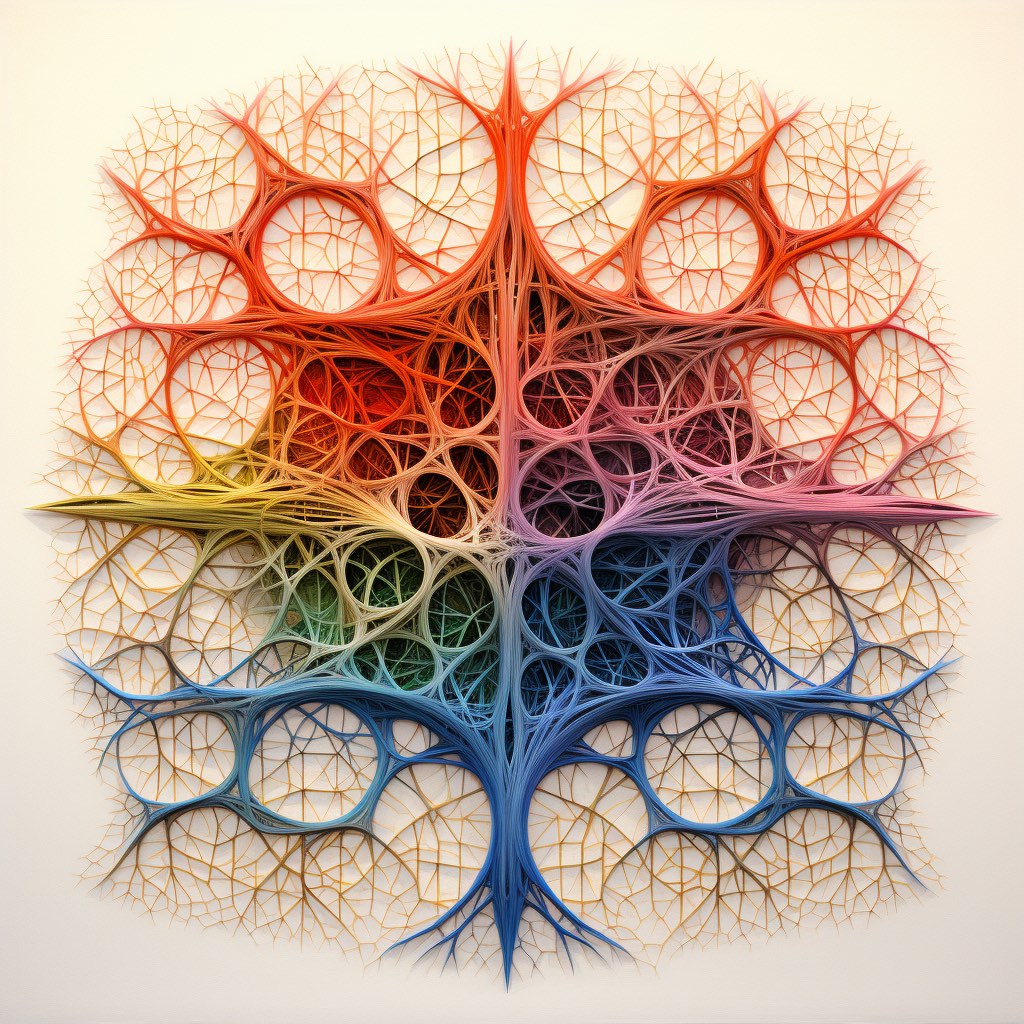
I learned about the ACT matrix from Prosocial, a body of work dear to my heart and very aligned with what I say here. An ACT matrix comes from therapy but we can use it as groups as well to gain clarity of the context. Imagine four quadrants and a topic or question. The vertical…
-

Power isn’t what we think it is
What if no one has power – not the CEO, the president, or the founder? What if it is actually not even possible to “have power”, and “power” is just a comforting illusion – and a dangerous one? Could it be that modern self-management – aiming to “distribute power” – remains in the same paradigm…
-

Organizations Beyond Purpose
Organizations deserve dignity as collective beings In my recent article, “Burned out on goodness,” I mentioned that I no longer believe in organizational purposes, at least not in the way they are often used. I even find that our purpose obsession is a hefty remnant of our mental colonization. How so? The imperative to be…
Curious to learn more? Subscribe to the mailing list for updates. You can also get more involved.